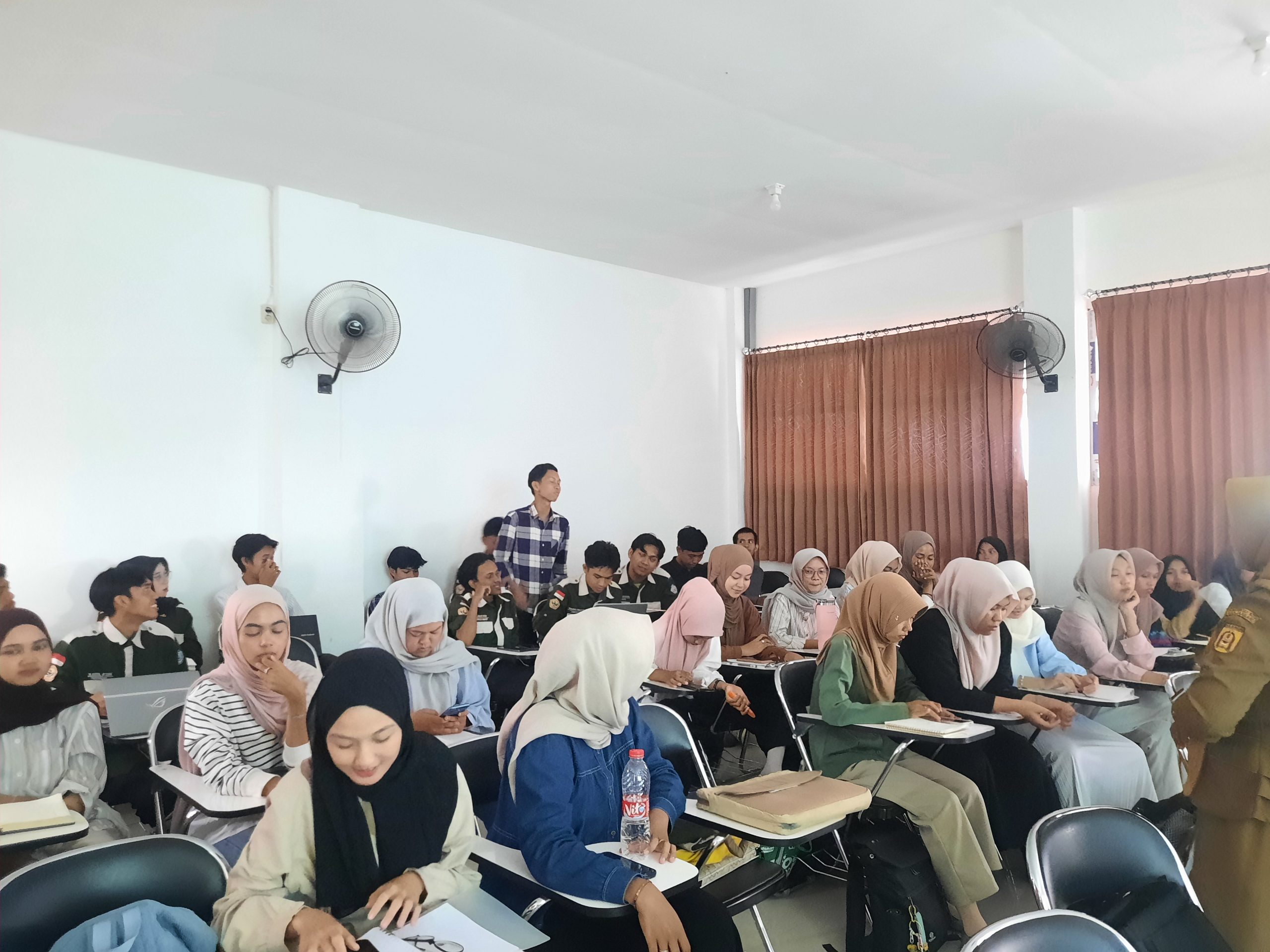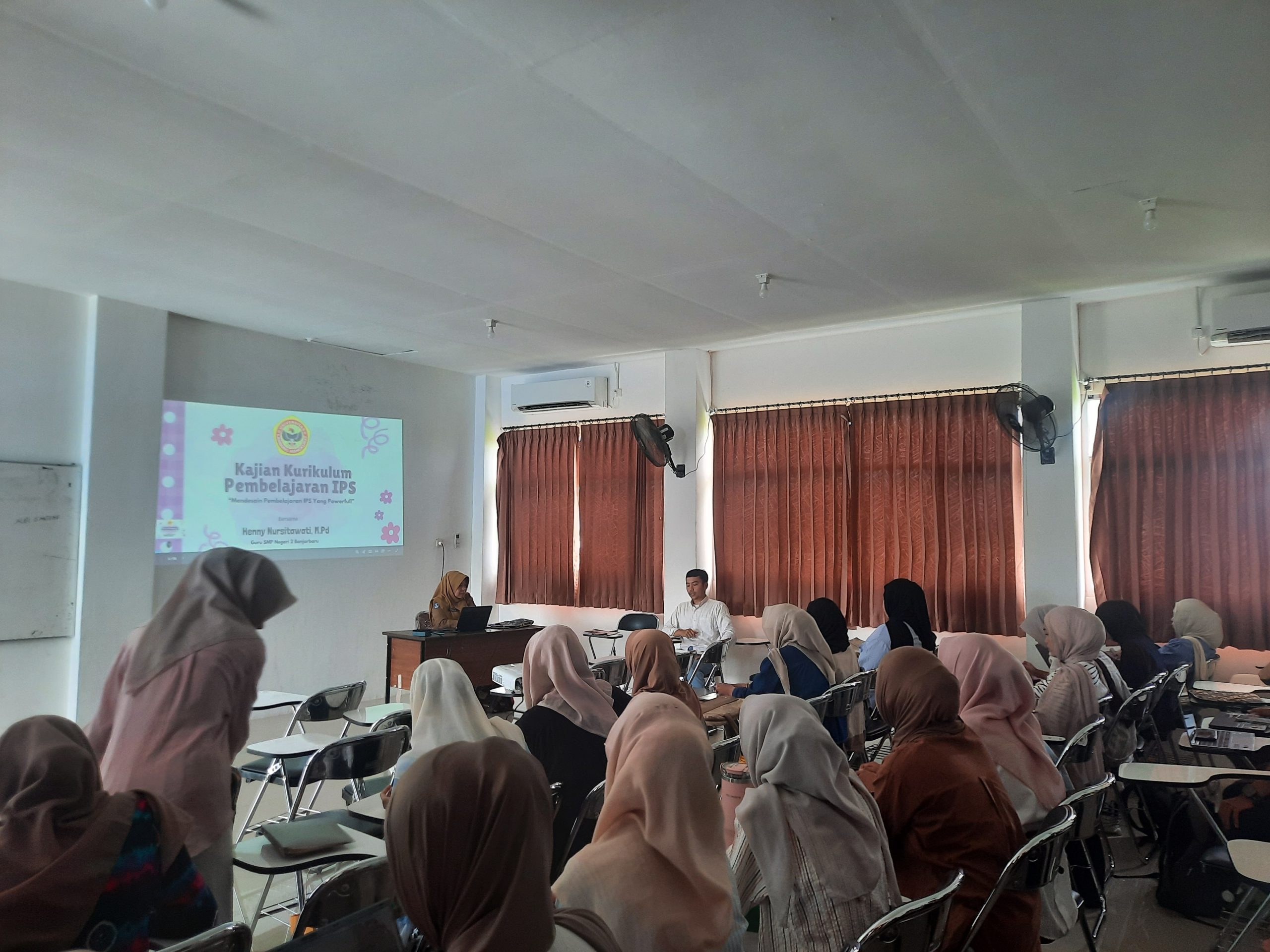
Banjarmasin — The Department of Social Science Education, Faculty of Teacher Training and Education (FKIP), Universitas Lambung Mangkurat (ULM), once again demonstrated its commitment to improving students’ academic quality and professional competence through the organization of the Training on Curriculum Design and Integrative Thematic Lesson Plans for Students. The activity was held on Monday, May 11, 2026, at Classroom 41 FKIP ULM as part of efforts to strengthen the pedagogical competence of prospective Social Science teachers in designing innovative, contextual, and curriculum-oriented learning.
The training was attended by students enrolled in the Junior High School Curriculum Studies course for classes A1 and A2. The event was officially opened by M. Ridha Ilhami, S.Pd., M.Pd., lecturer of the Curriculum Studies course. In his opening remarks, he emphasized the importance of students’ ability to understand curriculum implementation in real school environments and to develop learning instruments that are relevant to students’ educational needs.
“It is hoped that students will actively participate in this activity and gain new perspectives regarding practical curriculum and lesson plan development,” he stated.
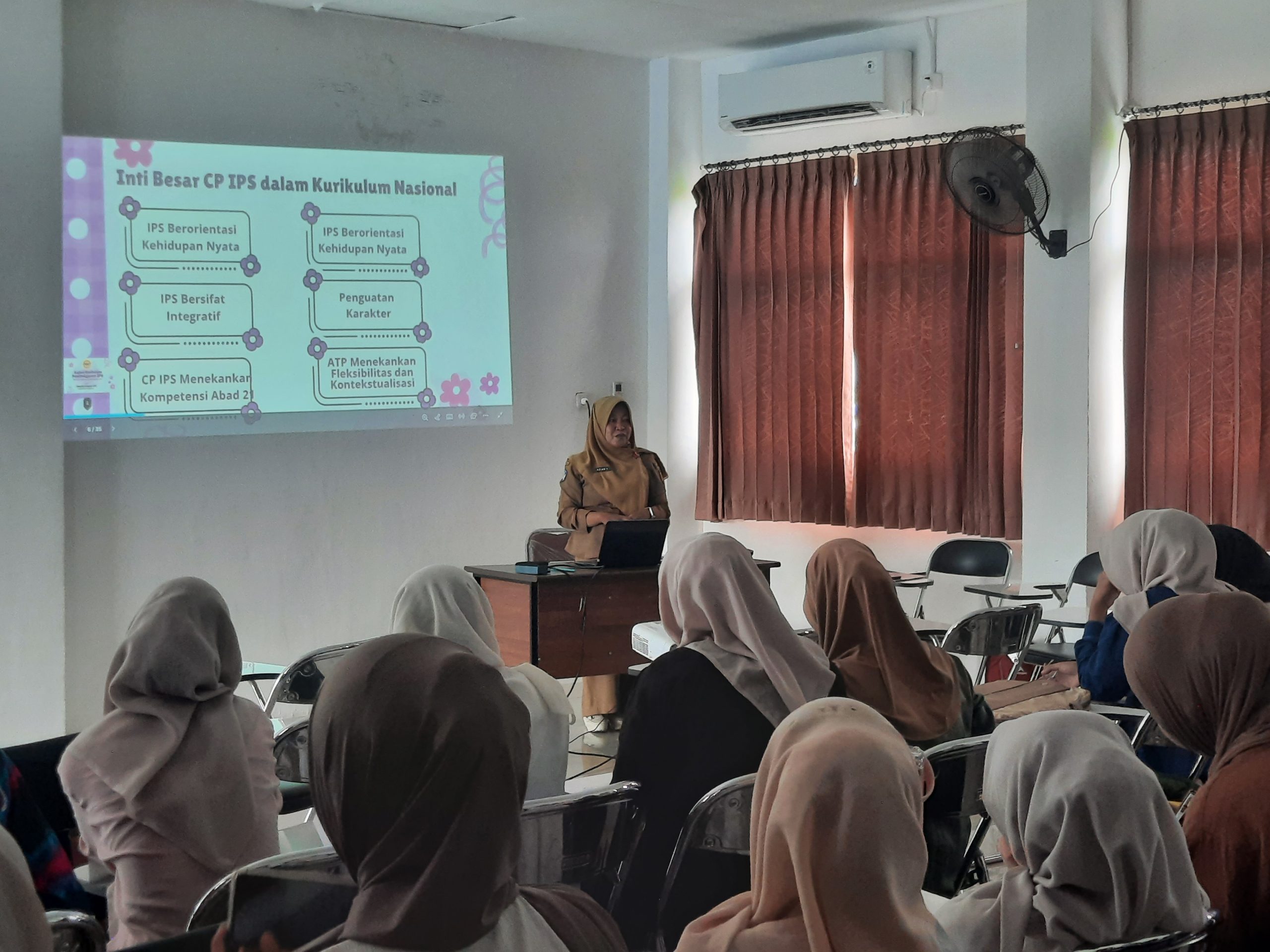
The training featured Henny Nursitawati, M.Pd., a teacher from SMP Negeri 2 Banjarbaru, as the main speaker. The presence of an experienced educational practitioner provided students with direct insights into curriculum implementation and the preparation of integrative thematic lesson plans based on real classroom practices.
This activity was initiated in response to the growing importance of strengthening students’ competencies in curriculum design and instructional planning in the era of the Merdeka Curriculum. The Department of Social Science Education FKIP ULM believes that prospective teachers should not only master theoretical concepts learned in university classrooms, but also possess practical skills in designing effective, creative, student-centered learning that addresses the challenges of 21st-century education.
The training was conducted interactively through three main sessions, namely the introduction to curriculum design concepts, technical guidance on preparing integrative thematic lesson plans, and hands-on practice in developing instructional materials. During the practical session, students were given opportunities to independently design curriculum components and Social Science lesson plans under the direct supervision of the speaker and course lecturers.
Students showed great enthusiasm throughout the program, particularly during discussion and consultation sessions related to classroom learning implementation. Participants actively raised questions concerning teaching strategies, learning objectives, assessment methods, and the integration of thematic learning into Social Science subjects. These interactions created a dynamic and collaborative academic atmosphere among students, lecturers, and educational practitioners.
The activity also reflects the Department of Social Science Education FKIP ULM’s strong commitment to supporting educational quality improvement through the enhancement of future teachers’ competencies. Furthermore, the training contributes to the achievement of the Sustainable Development Goals (SDGs), particularly Goal 4 on Quality Education through the strengthening of students’ pedagogical competencies, and Goal 17 on Partnerships for the Goals through collaboration between higher education institutions and school practitioners.
Through this training program, the Department of Social Science Education FKIP ULM hopes that students will be able to develop professional skills in designing creative, integrative, innovative, and relevant Social Science learning that aligns with students’ needs and the evolving landscape of contemporary education.