Banjarbaru Social Science Teachers Trained to Use AI for Developing Local Wisdom-Based Learning Resources
Integrating Artificial Intelligence, Local Contexts, and Peatland Wisdom into Social Science Education
August 19, 2025
Hall of SMP Negeri 1 Banjarbaru
Banjarbaru, South Kalimantan
Hall of SMP Negeri 1 Banjarbaru
Banjarbaru, South Kalimantan
Training on AI-Supported Social Science Learning Resources
Social Science teachers who are members of the Banjarbaru City Social Science Subject Teachers’ Association (MGMP IPS) were encouraged to utilize Artificial Intelligence (AI) technology to develop creative, contextual, and learner-centered learning resources connected to students’ everyday lives.
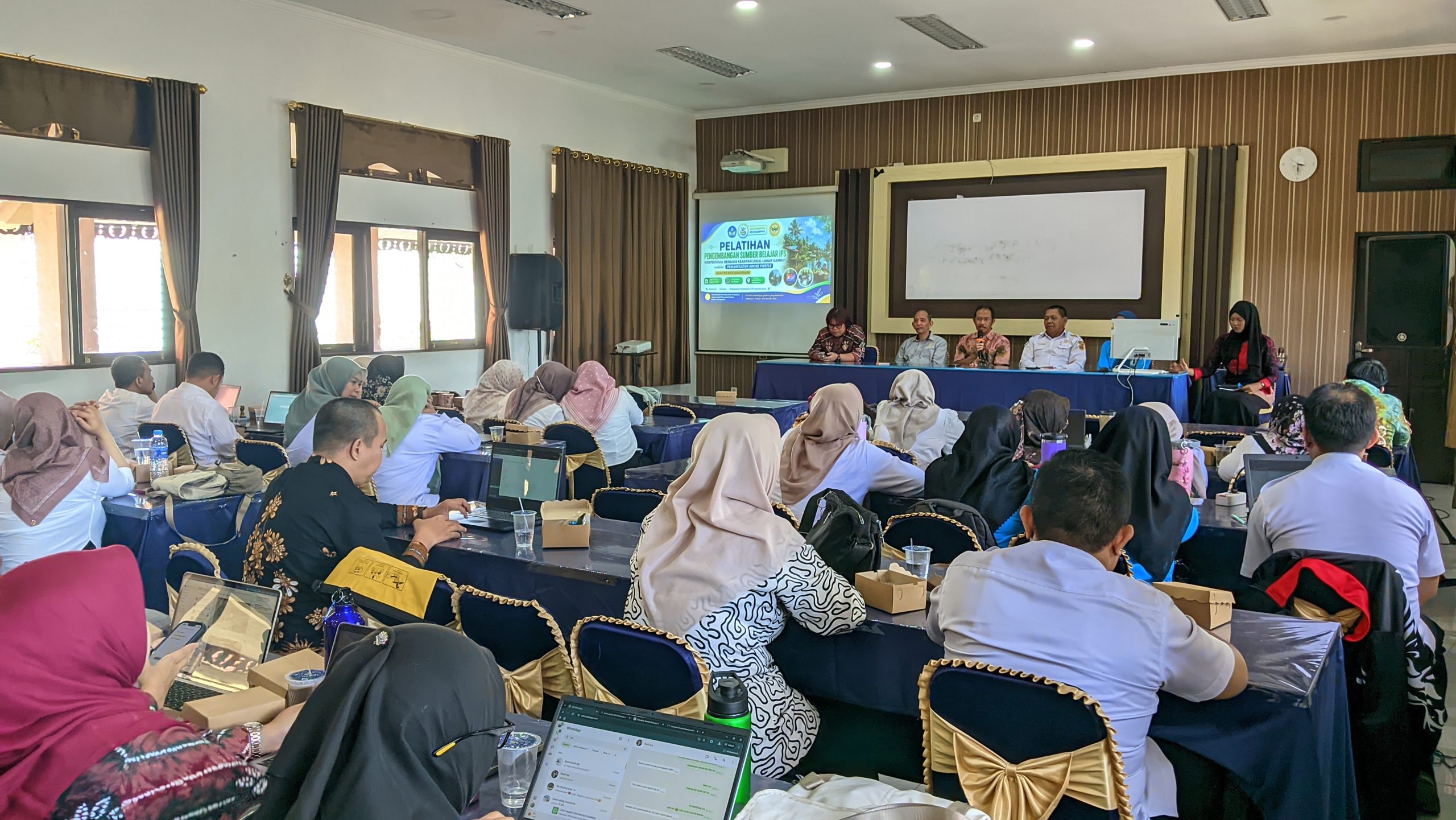
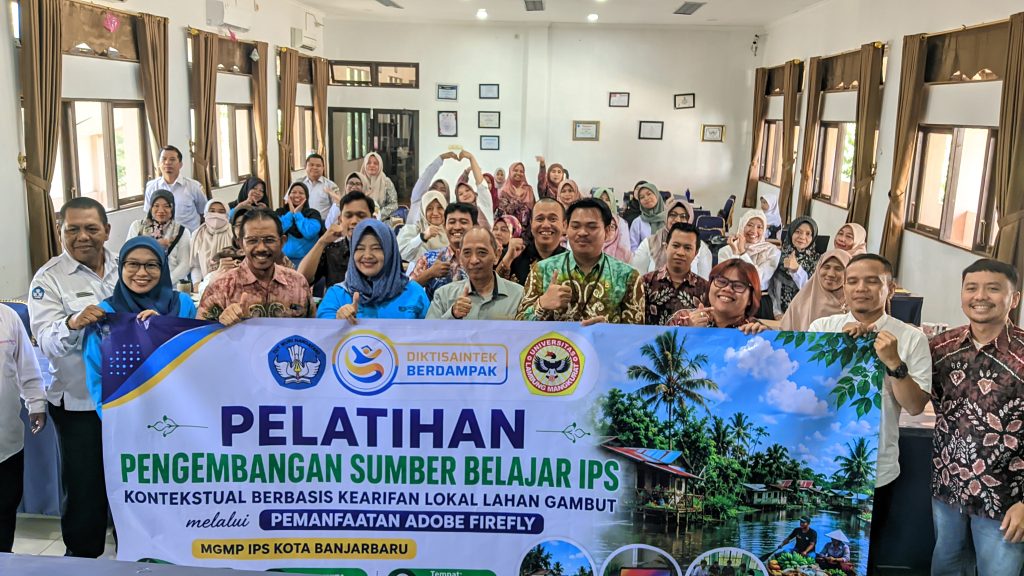
The initiative was delivered through the Program Dosen Wajib Mengabdi (PDWA) entitled “Training on Developing Contextual Social Science Learning Resources Based on Peatland Local Wisdom through the Use of Adobe Firefly,” held on August 19, 2025, at the Hall of SMP Negeri 1 Banjarbaru.
Training and Mentoring by the PDWA Team
The PDWA activity was led by Syarifuddin, S.Pd., M.Pd., as the head of the PDWA team and the resource person. He provided training and mentoring on the use of generative AI, particularly Adobe Firefly, to support the development of Social Science learning resources.
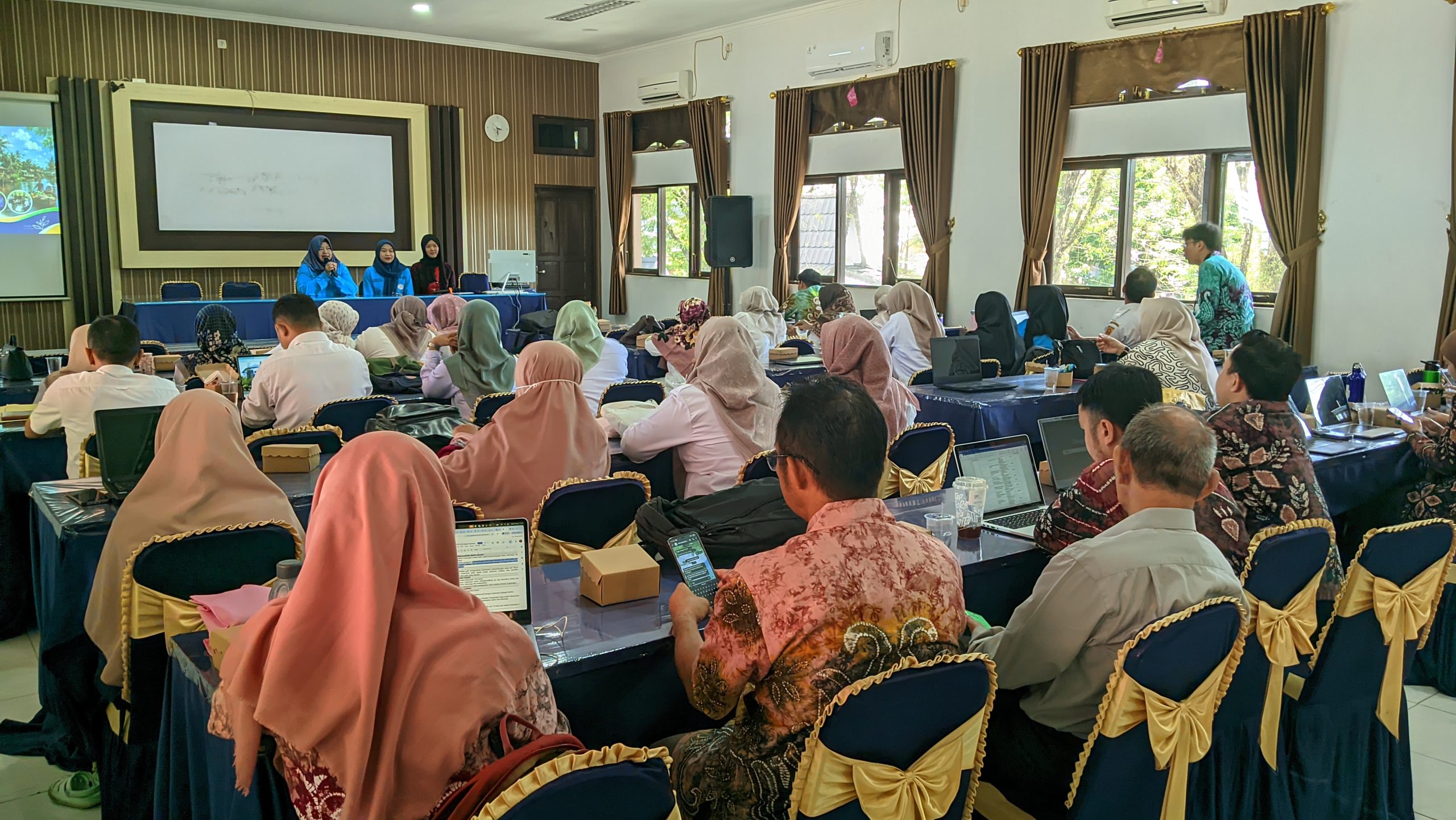
Participants were introduced to a learning-oriented workflow that began with identifying learning needs, determining learning content, developing prompts, generating visual materials, evaluating the results, and integrating the outputs into instructional materials.
AI as a Supporting Tool for Learning
During the training, Syarifuddin explained that the use of AI in education should not be limited to generating images. AI can serve as a supporting tool for teachers to create contextual learning resources with pedagogical value. Teachers remain responsible for designing learning activities and making decisions about the relevance and use of AI-generated materials.
Learning Needs
Teachers begin by identifying learning needs, objectives, and content before using AI to support the development of learning resources.
Prompt Development
Participants learn to formulate prompts that reflect the desired learning context and visual representation.
Evaluation
AI-generated outputs are reviewed before being incorporated into learning materials to ensure their relevance and accuracy.
Bringing South Kalimantan’s Local Context into Learning
Participants practiced using the Text to Image feature in Adobe Firefly by incorporating various local contexts from South Kalimantan, including peatlands, rivers, community economic activities, river transportation, social life, culture, and local wisdom.
Local contexts are important in developing Social Science learning resources because students can understand concepts more easily when learning materials are connected to environments and everyday experiences that are familiar to them.
“We use AI as a tool to enrich teachers’ creativity. However, teachers remain the main designers and decision-makers in the learning process. AI-generated results must be reviewed to ensure that they are consistent with facts, culture, the environment, and learning objectives.”
— Syarifuddin, S.Pd., M.Pd.
From AI-Generated Visuals to Student Worksheets
One of the participants’ practical outputs was a visual representation of community economic activities in the river and wetland areas of South Kalimantan. The visual depicted trading activities using boats, interactions between sellers and buyers, riverside settlements, wetland vegetation, and rivers as spaces for community life and economic activities.
The visual output was then developed into a Student Worksheet (Lembar Kerja Peserta Didik/LKPD). Through this approach, participants not only learned how to create images using AI but also explored how visual products could be transformed into learning stimuli for observing, discussing, analyzing, and drawing conclusions in Social Science learning.
Institutional and Professional Support
The Head of the Department of Social Science Education, Dr. Mutiani, M.Pd., expressed support for the activity. Efforts to strengthen teachers’ technological competencies should remain oriented toward improving learning quality and ensuring that learning materials remain relevant to students’ lives.
Meanwhile, the Head of the Banjarbaru City Social Science MGMP, Andinna Mega Siwi, M.Pd., welcomed the training. The activity provided teachers with new experiences in developing more varied learning resources through AI technology while incorporating the local potential of South Kalimantan.
Strengthening AI Literacy and Ethics
The training emphasized that AI-generated outputs should not be accepted without further review. Teachers were encouraged to verify factual accuracy, cultural representation, environmental context, visual content, and alignment with learning objectives before using AI-generated materials in educational activities.
Developing Creative and Contextual Learning Resources
Through this PDWA activity, Social Science teachers in Banjarbaru are expected to develop various AI-supported learning resources, including student worksheets, educational illustrations, posters, infographics, and visual teaching materials that incorporate the environment, culture, and local wisdom of South Kalimantan.
The activity also represents an effort to promote Social Science learning practices that are creative, contextual, technology-supported, and rooted in the local environment and community life. The integration of AI with local contexts provides teachers with additional possibilities for developing learning resources while maintaining the pedagogical role of teachers as designers and decision-makers.
Contribution to the Sustainable Development Goals