Accelerating Innovation: Social Science Education Students of ULM Ready to Compete in the National Student Creativity Program (PKM)
Accelerating Innovation: Social Science Education Students of ULM Ready to Compete in the National Student Creativity Program (PKM)
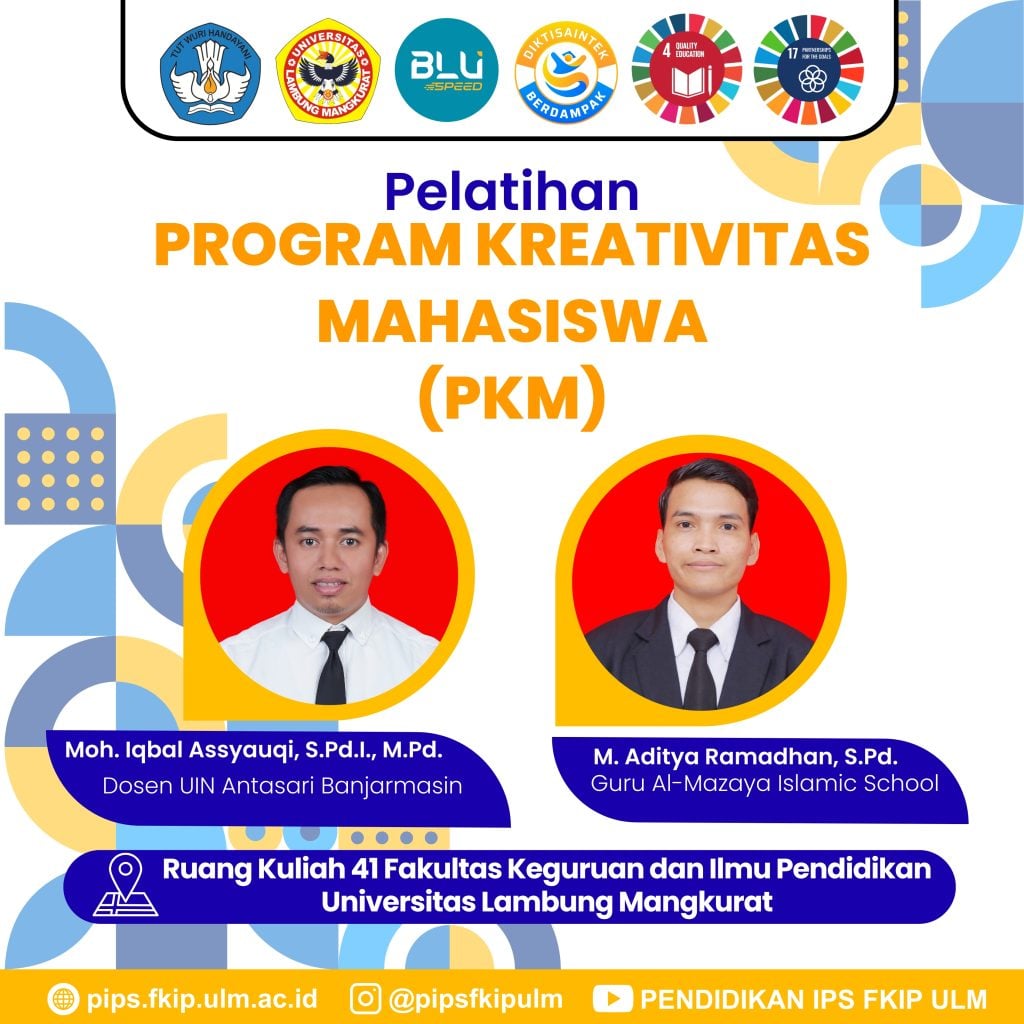
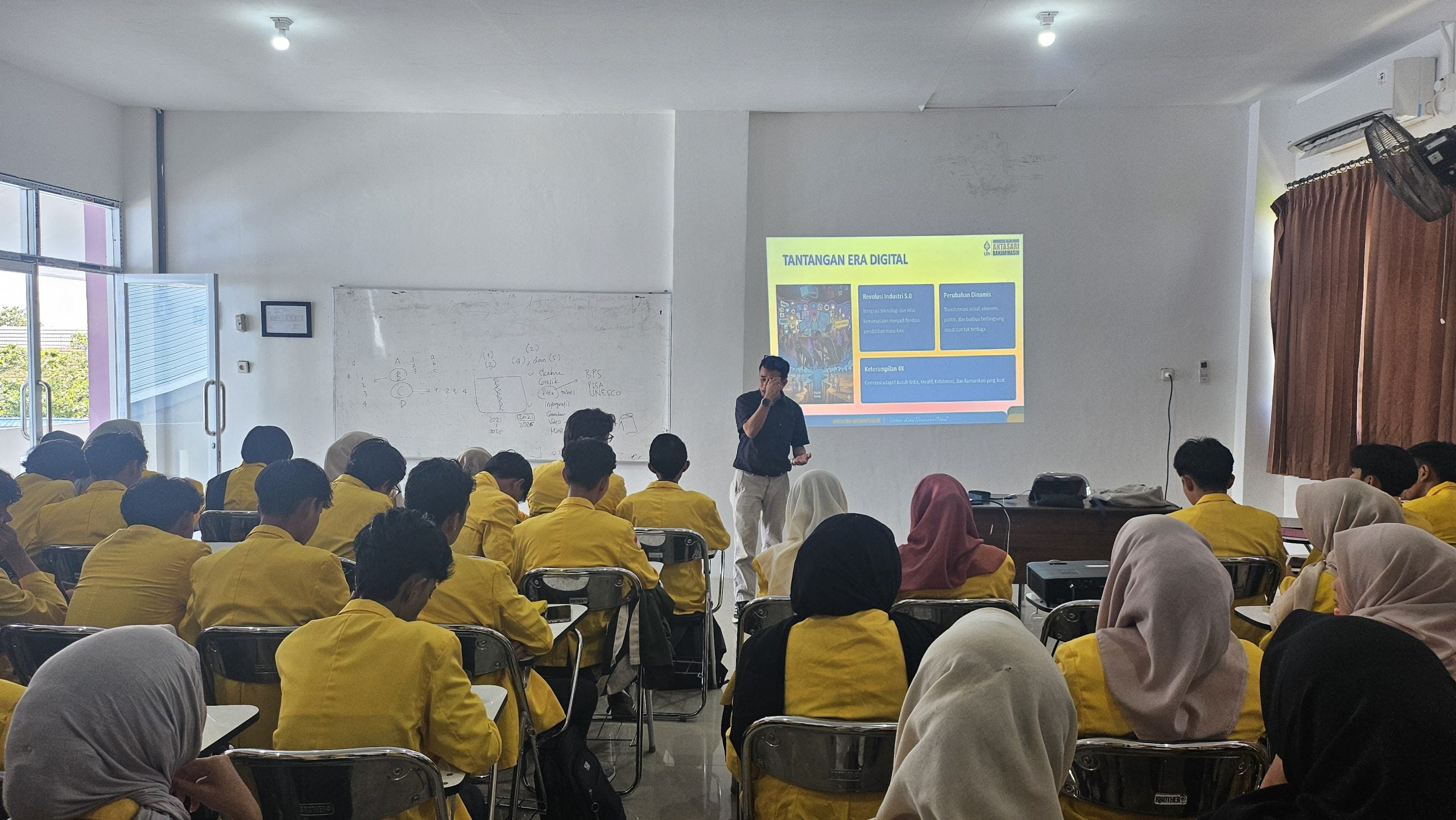
Banjarmasin, April 21, 2026 – The Department of Social Science Education, Faculty of Teacher Training and Education (FKIP), Lambung Mangkurat University (ULM), successfully organized a Student Training Program through the Student Creativity Program (PKM) aimed at enhancing students’ capacity to produce innovative and competitive works at the national level. The activity was held in Classroom 41 of FKIP ULM and attended by students from the 2024 and 2025 cohorts who are interested in developing creative ideas through the Student Creativity Program.
The training featured two distinguished speakers, Moh. Iqbal Assyauqi, S.Pd.I., M.Pd., and M. Aditya Ramadhan, S.Pd. The event was officially opened by the Head of the Department of Social Science Education, Dr. Mutiani, S.Pd., M.Pd., and was attended by students as participants and invited guests.
The organization of this training was driven by the urgent need to equip students with critical and innovative thinking skills through the Student Creativity Program (PKM). Amid the dynamic landscape of higher education, students are expected not only to master theoretical knowledge but also to formulate solutions to societal challenges through systematic, creative, and nationally competitive proposals. This initiative represents a strategic effort by the Department of Social Science Education FKIP ULM to strengthen the culture of research, innovation, and student capacity development, enabling students to produce meaningful contributions to society and the field of education.
In her opening remarks, Dr. Mutiani emphasized that the Student Creativity Program serves as an essential platform for developing students’ creativity and problem-solving abilities.
“The Student Creativity Program (PKM) is not merely a competition; it is a golden bridge that enables students to transform visionary ideas into impactful and practical solutions. This training serves as a catalyst for strengthening critical thinking while sharpening the technical skills required to develop competitive proposals at the national level. Through substantive guidance from today’s experts, we aim to ensure that every student idea possesses strong value and competitiveness. This initiative reflects our commitment to SDG 4 by promoting quality education through the development of competencies that are responsive to contemporary challenges. At the same time, it reinforces SDG 17 by fostering partnerships and intellectual collaboration to create a sustainable innovation ecosystem within the university. I hope that the synergy between expert guidance and student creativity will produce outstanding works that not only excel academically but also become agents of social change for the wider community. Let us continue to innovate and create meaningful contributions with lasting impact,” she stated.
The training was conducted through an intensive workshop approach that combined theoretical instruction with practical mentoring sessions. The program began with presentations on the latest policies and evaluation criteria of the Student Creativity Program delivered by experienced speakers specializing in proposal development and student competitions. Participants gained comprehensive insights into idea generation techniques, problem identification, background formulation, innovative solution design, and proposal-writing strategies that meet the administrative and substantive standards established by the Directorate of Learning and Student Affairs (Belmawa).
The event continued with idea-review sessions and collaborative proposal-drafting simulations. Through interactive discussions, students had the opportunity to consult directly with the speakers regarding PKM schemes relevant to the fields of social sciences and education. This approach was designed to ensure effective knowledge transfer, enabling students not only to understand theoretical concepts but also to produce solid, creative, innovative, and competition-ready proposal drafts.
Students demonstrated great enthusiasm throughout the program, actively participating in discussions and sharing innovative ideas inspired by social, educational, and community-development issues. The high level of engagement reflected the commitment of Social Science Education students at FKIP ULM to continuously enhance their academic competencies while generating solutions that contribute positively to society.
This activity directly supports the achievement of the Sustainable Development Goals (SDGs), particularly SDG 4 (Quality Education) by enhancing students’ technical competencies, professionalism, creativity, and critical-thinking abilities beyond the formal curriculum. Furthermore, it contributes to SDG 17 (Partnerships for the Goals) through collaboration among academics, practitioners, and students in building an inclusive, collaborative, and sustainable educational ecosystem.
Through this training program, the Department of Social Science Education FKIP ULM remains optimistic about encouraging the development of high-quality and competitive PKM proposals. The synergy between expert guidance and student creativity is expected to generate outstanding innovations that not only achieve academic excellence at the national level but also contribute to the advancement of knowledge, the resolution of social challenges, and the improvement of community welfare.