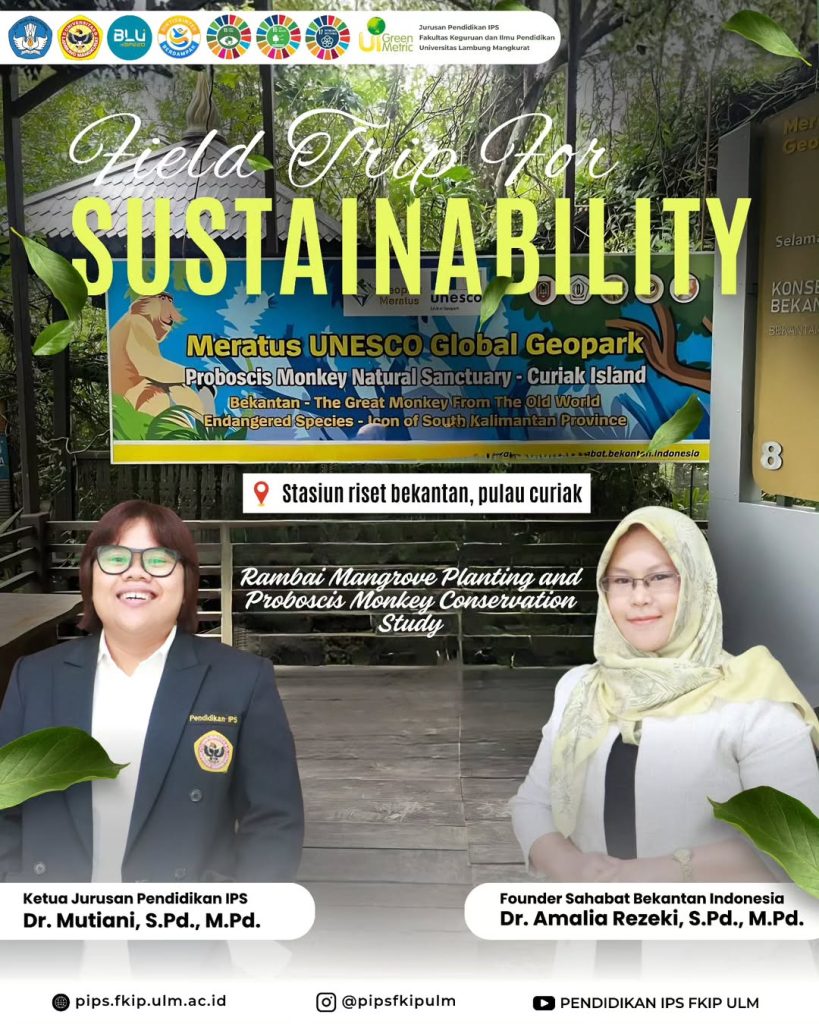
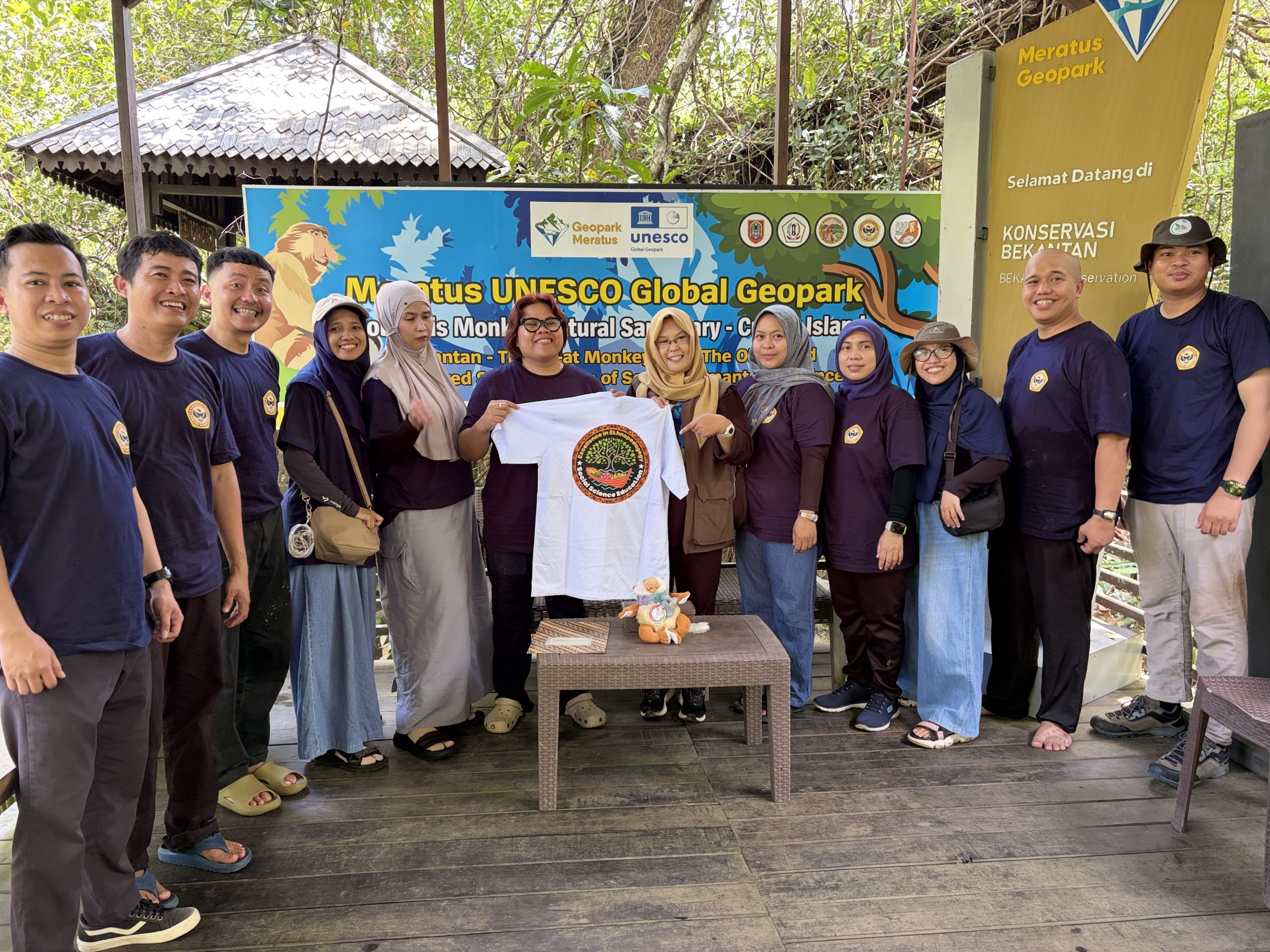
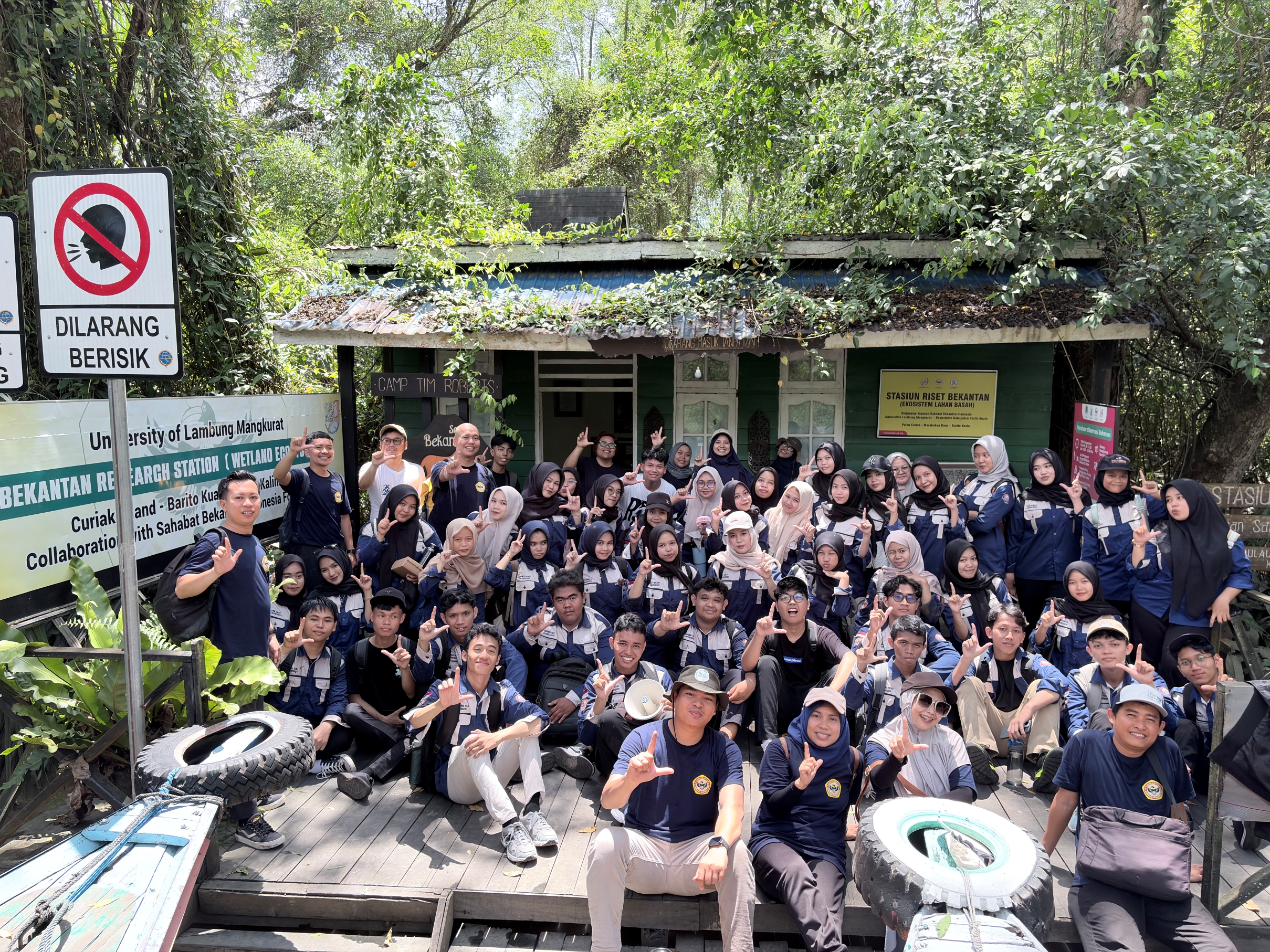
Banjarmasin, April 12, 2026 — Students of the Department of Social Science Education, Faculty of Teacher Training and Education (FKIP), Universitas Lambung Mangkurat (ULM), together with lecturers, participated in an environmental field activity titled “Field Trip for Sustainability: Rambai Mangrove Planting and Proboscis Monkey Conservation Study.” The activity was conducted on Sunday, April 12, 2026, at the Proboscis Monkey Research Station on Curiak Island.
The activity was officially opened through an initial briefing session led by the organizing team and field coordinators before departure. The main speaker and resource person in this activity was Dr. Amalia Rezeki, M.Pd., Chairperson of Sahabat Bekantan Indonesia Foundation, who provided comprehensive insights into environmental conservation and ecosystem sustainability. The invited participants included Social Science Education students and lecturers who actively engaged in the program.
In her remarks, Dr. Amalia Rezeki emphasized the strategic role of students in environmental conservation:
“Students play a crucial role as agents of change who not only understand environmental issues theoretically but also actively participate in real conservation efforts.”
The background of this activity (why) lies in the importance of integrating environmental education with real-world practice. As part of sustainability-based learning, this field trip aimed to enhance students’ ecological awareness while contributing directly to environmental conservation efforts, particularly in preserving mangrove ecosystems and protecting the habitat of the proboscis monkey (bekantan), an endemic species of Kalimantan.
The implementation of the activity (how) began at 06:30 WITA with registration and briefing at Siring Banjarmasin. Participants departed at 08:00 WITA using traditional boats (klotok) toward Curiak Island, providing an initial opportunity for environmental observation along the river ecosystem of South Kalimantan. Upon arrival, participants were welcomed by the sight of proboscis monkeys in their natural habitat, offering an authentic learning experience.
The program continued with an educational session delivered by the Sahabat Bekantan Indonesia team, covering the ecological importance of Curiak Island, the role of rambai mangroves as a primary food source for proboscis monkeys, and challenges in maintaining ecosystem balance. Participants were also given technical guidance on proper mangrove planting methods to ensure sustainable growth.
Following the briefing, students and lecturers actively participated in planting rambai mangroves in designated areas as a concrete action toward environmental preservation. The activity aligns with the Sustainable Development Goals (SDGs), particularly Goal 13 (Climate Action), Goal 15 (Life on Land), and Goal 17 (Partnerships for the Goals).
The activity was attended by invited participants consisting of students and lecturers of Social Science Education FKIP ULM, who demonstrated strong enthusiasm and commitment throughout the program. The interaction between participants and conservation practitioners enriched students’ understanding of environmental issues from ecological, social, and economic perspectives.
Through this field trip, students not only gained theoretical knowledge but also practical experience that strengthens ecological awareness, critical thinking, and problem-solving skills. The activity serves as a meaningful platform for integrating academic learning with real-world environmental action, reinforcing the role of students as responsible and environmentally conscious future educators.